

According to the United Nations, approximately 1.3 million people die annually as a result of road traffic collisions. However, by harnessing the power of artificial intelligence, the UN says that these figures could be halved by 2030.
AI and its role in road safety
Technology has been used for decades to assist drivers with safe manoeuvring of their vehicles. This includes the first reversing alarm that was introduced by Brigade to the UK in 1976. However, since then, the technology used for commercial vehicle safety systems has evolved considerably with artificial intelligence (AI) now leading the way in helping to create advanced and intuitive safety devices.
From remote fleet management to identifying objects and people, AI’s capabilities are manifold.
While the first vehicle turn-assist systems incorporating AI were basic, technology has advanced quickly to ensure that AI is used to address issues and create viable safety solutions for drivers and fleet managers.
The introduction of AI into vehicle safety systems, such as Brigade’s Sidescan®Predict collision avoidance system, has helped to significantly reduce the number of false alerts that would have otherwise been detected by less advanced products.

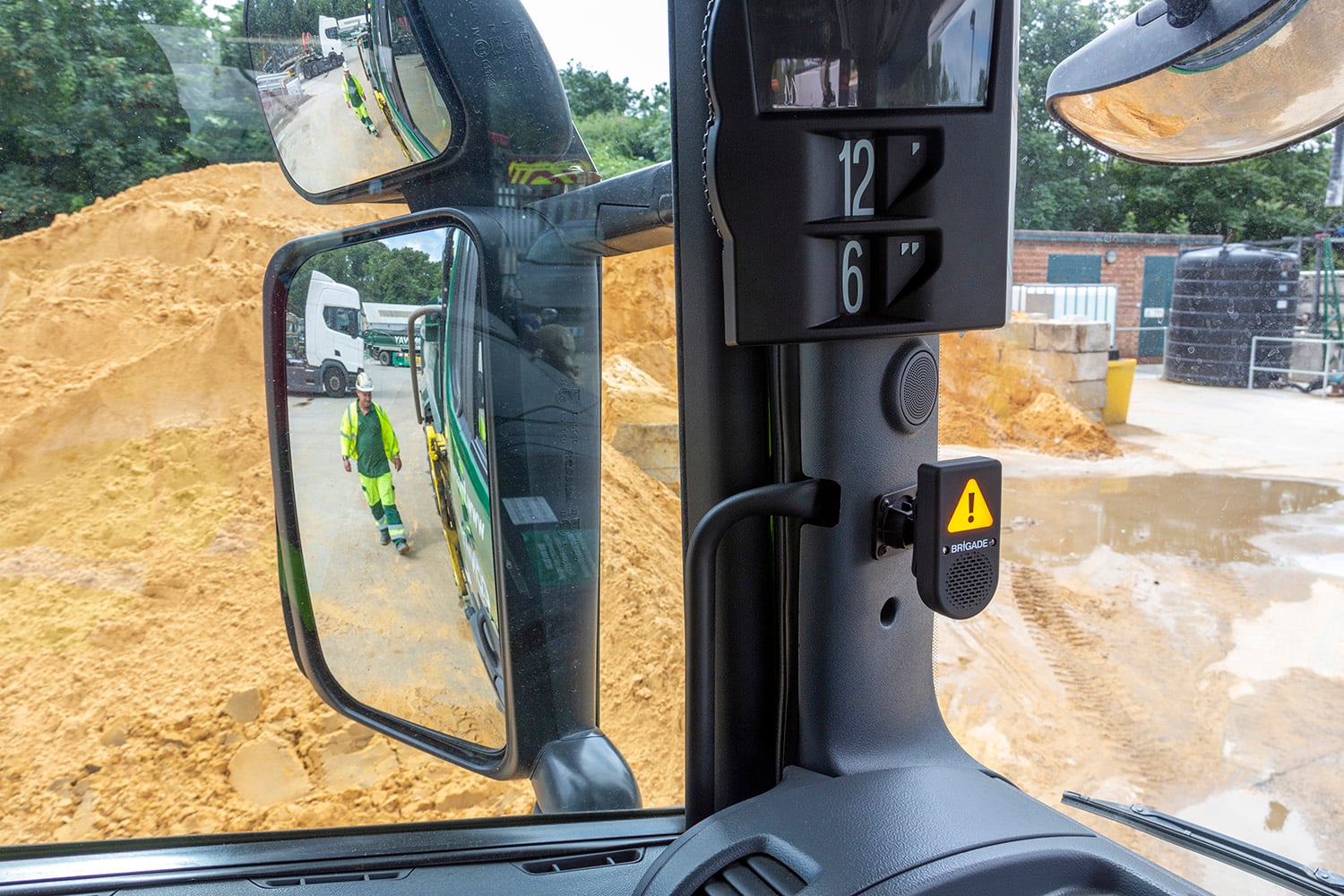
How does AI work in Brigade’s Sidescan®Predict?
This data feeds an algorithm created by Brigade to calculate the risk of a collision with cyclists and pedestrians who are nearby the vehicle.
Sidescan®Predict is always switched on, including at speeds below 18mph. And crucially, the collision protection is active with or without the indicators on. This is particularly important as it is recognised that some drivers become fatigued by false alerts, leading them to avoid using indicators to prevent alerts from being triggered, potentially putting vulnerable road users at risk.