


Drivers of commercial vehicles are responsible not only for their own safety while working but also that of other road users; driver safety cameras can play a major part in keeping them focused. We investigate how these cameras contribute to overall road safety.
Responsible drivers know that while driving, they are in control of a machine which is capable of causing significant injury and death. The potential for fatal and non-fatal collisions is high when commercial vehicles are in the vicinity of vulnerable road users, cyclists, pedestrians and site workers. However, the possibility of becoming distracted while driving is something which can happen to anyone, however conscientious.
According to ‘Driver Attitudes to Vehicle Safety and Technology’, a recent report from global NGO Together for Safer Roads, (TSR) most drivers with commercial fleets travel 25,000+ miles per year and have a greater than 1 in 15 chance of being involved in a collision. Resulting fatalities are also rising, with the first half of 2021 showing an alarming 18.4% increase. Statistics show that becoming distracted while driving is the main cause of preventable crashes within fleets, with 41% of HGV collisions attributed to driver error. In addition, studies show that reaction times can be up to 57% slower when drivers are distracted by mobile phones and infotainment systems.
Promoting vehicle safety with Driver Safety Cameras
There are an increasing number of high-tech safety solutions which fleet owners can utilize to promote vehicle safety, and recently a new product has entered the market – driver safety cameras. They aim to reduce the possibility of an incident caused by lack of concentration on the part of a driver, or driver fatigue, and the recent introduction of artificial intelligence into these cameras has raised the specification considerably.
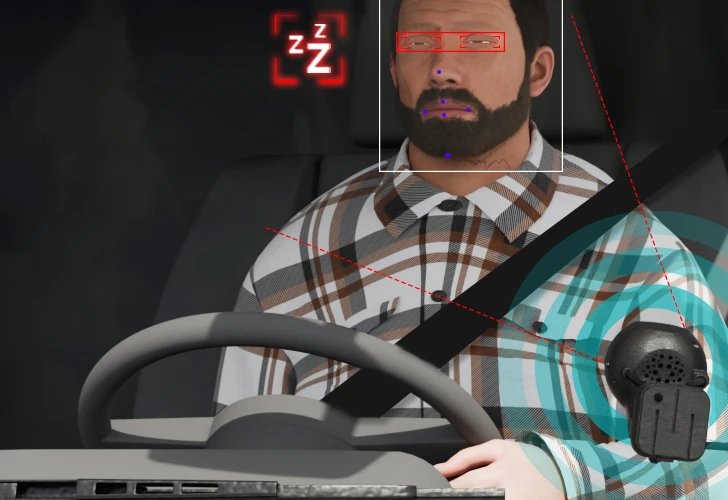
Sensors positioned near the steering wheel track signs of distracted behaviour and tiredness by continuous monitoring of the driver’s face, eyes and head movements. They can pick up on cellphone usage, seatbelt deployment and in-cab smoking as well as unusual drooping, yawning or nodding, and systems can also detect frequency of blinking and postural changes such as slouching down in the seat.
Built-in AI analyzes these signals and provides audible alerts to the driver. Erratic steering and unusual vehicle positioning can also trigger an alarm, and there is the option of alerting the fleet manager too.
Initially, there was considerable controversy in the commercial transport sector about the introduction of these cameras, with the balance between the safety aspect and the privacy of the driver being hotly debated. They capture continuous footage of the driver’s face, upper body and the cab behind, and many drivers feel uneasy about this level of surveillance. However, this attitude is rapidly changing.
At Brigade, we fully understand these concerns and are keen to address them so as to reassure drivers and put forward the many benefits of driver distraction cameras. We have introduced an AI Driver Safety Camera to our portfolio and we’re keen to demonstrate how it can be a positive contribution to a commercial fleet. Its use is intended to support drivers and promote their own safety as well as that of other road users. The alerts can provide drivers with immediate feedback, allowing them to correct unsafe behaviours effectively and in situ.

Results from a survey in the TSR report indicated that when drivers are exposed to the feedback given from the cameras, it positively influences their attitude to risk:
- 53.6% of respondents report they are more careful when driving
- 52.6% of respondents feel they are now a safer driver
- 26% of respondents have avoided a crash due to an in-cab alert
- 20.6% were exonerated in a crash caused by someone else
Driver distraction cameras are just as likely to prove a driver’s diligence and reliability as they are to show up distracted driving. Good drivers will receive recognition for their driving with solid evidence to back it up, and footage can be a useful tool for training and development, contributing to overall fleet safety and effectiveness. Also, with the large number of incidents in which distraction is a factor, insurers are more likely to reduce premiums for vehicles with a drowsiness camera, as fraudulent claims will be unlikely to succeed.
It's important that when driver distraction cameras are fitted, management takes time to explain the benefits and the guidelines, ensure drivers are treated with dignity and respect and given the opportunity to voice concerns. When sensitively handled, the introduction of driver distraction cameras will make a major contribution towards a working culture where the safety of everyone involved is a top priority – something Brigade has been working for since 1976.
Why not get in touch and find out how our new AI Driver Distraction Camera and other products are making commercial driving safer.