

IP Rating Explained
What Is an IP Rating?
An IP rating (Ingress Protection rating) is an internationally recognised standard that indicates how well an electrical product is protected against the ingress of dust, dirt and water.
Developed by the International Electrotechnical Commission (IEC) and defined under EN 60529, the IP rating system helps users understand how suitable a product is for different operating environments.
For vehicle safety systems, cameras, monitors, sensors and other electronics are often exposed to rain, dust, mud, pressure washing and harsh working conditions. Choosing equipment with the correct IP rating helps ensure reliable performance and long service life.

What Do the IP Numbers Mean?
An IP rating consists of two digits:
IP69K (for example)
- First digit: Protection against solid objects and dust
- Second digit: Protection against water and moisture
The higher the number, the greater the level of protection.

Ingress Protection

Solids Protection

Liquids Protection

Supplementary Letter
"K" represents protection against high-pressure, high-temperature wash-down applications.
First Digit: Protection Against Solids
Second Digit: Protection Against Liquids
IP Rating Chart
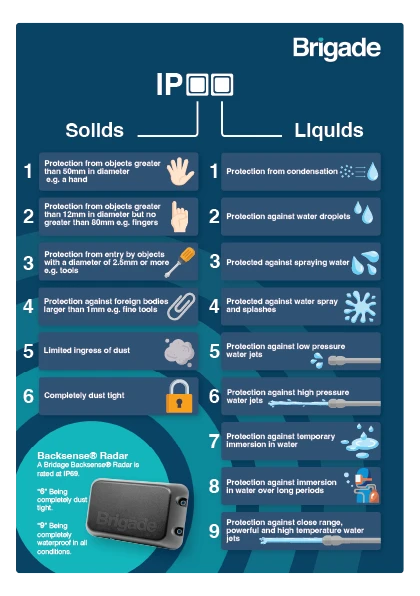
When comparing products, an IP rating chart provides a quick reference for understanding the level of protection offered against dust and water.
For demanding industries such as construction, mining, waste management and agriculture, products with IP67, IP68 or IP69K ratings are often preferred due to their ability to withstand challenging environmental conditions.

 |
Protection from objects greater than 50mm in diameter e.g. a hand |
 |
Protection from condensation |  |
 |
Protection from objects greater than 12mm in diameter but no greater than 80mm e.g. fingers |  |
Protection against water droplets |  |
 |
Protection from entry by objects with a diameter of 2.5mm or more e.g. tools |  |
Protected against spraying water |  |
 |
Protection against foreign bodies larger than 1mm e.g. fine tools |  |
Protected against water spray and splashes |  |
 |
Limited ingress of dust |  |
Protection against low-pressure water jets |  |
 |
Completely dust tight |  |
Protection against high-pressure water jets |  |
 |
Protection against temporary immersion in water |  |
||
 |
Protection against immersion in water over long periods |  |
||
 |
Protection against close-range, powerful and high-temperature water jets |  |
What Is IP69K?
IP69K is one of the highest protection ratings available for commercial vehicle electronics.
Products with an IP69K rating are:
- Completely dust-tight (IP6X)
- Protected against high-pressure, high-temperature water jets (IPX9K)
- Suitable for harsh outdoor environments
- Ideal for vehicles and machinery that are regularly pressure washed
Many Brigade cameras are rated IP69K, helping ensure dependable performance in demanding operating conditions. For example, Brigade’s AI cameras and Backeye®360 AI cameras are rated IP69K, making them suitable for commercial vehicles and mobile plant operating in challenging environments.
Choosing the Right IP Rating
When selecting vehicle safety equipment, consider:
- Exposure to dust, mud or debris
- Outdoor operation in all weather conditions
- Pressure washing requirements
- Operating environment and vehicle type
A higher IP rating generally provides greater protection and durability, helping maintain performance in challenging conditions.