

GSR2 Compliance Solutions for Regulation (EU) 2019/2144

What is GSR?
The General Safety Regulation (GSR) for trucks is a set of safety standards that applies to heavy-duty trucks in the European Union (EU). The regulation sets out a range of requirements that aim to improve the safety of all vehicles on the road by mandating the use of advanced safety technologies and improving the design of the truck cab.
The EU estimates its new vehicle regulations will save more than 25,000 lives and avoid at least 140,000 serious injuries by 2038.
Explore Brigade’s Solutions to GSR2
R151
Blind Spot Information System (BSIS)
The primary purpose of a BSIS is to assist drivers in identifying and avoiding potential collisions with cyclists that may be hidden from their direct line of sight.
R158
Rear Visibility and Detection
R159
Moving Off Information System (MOIS)
MOIS is a system to detect and inform the driver of the presence of pedestrians and cyclists in close-proximity to the front of the vehicle and, if necessary, warn the driver of a potential collision.
Which vehicles are affected by GSR?
The General Safety Regulation (GSR) also applies to trucks applies to heavy-duty trucks in the European Union (EU) that have a gross vehicle weight exceeding 3.5 tonnes. This includes a wide range of commercial vehicles such as freight trucks, delivery vans, buses, and coaches.

M2 - Passenger Transport
- With more than 8 seats in addition to the driver’s sea
- Vehicle of less than 5 tonnes

M3 - Passenger Transport
- With more than 8 seats in addition to the driver’s sea
- Vehicle of more than 5 tonnes

N2 - Goods Transport
- Weight between 3.5t and 12t

N3 - Goods Transport
- Weight superior than 12t
Key Notes
- GSR covers all new heavy-duty trucks sold in the EU, regardless of where they were manufactured.
- It also applies to trucks that are imported into the EU from other countries
What are "N" and "M" Category Vehicles?
Classifying “N” and “M” category vehicles are crucial for differentiating vehicles by their size, weight and purpose. Vehicles within these categories need to be fitted with certain vehicles safety equipment to be compliant for legislation initivaties like the Milan Blind Spot and GSR.
Enhancing Vehicle Safety Beyond GSR Standards
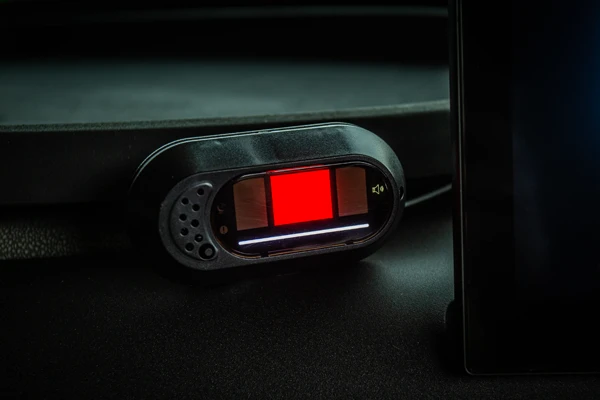
At Brigade, we offer safety systems tailored for Special Purpose Vehicle OEMs. Our advanced Front Radar system surpasses standard requirements by closing the critical 0.8m front gap identified in GSR’s R159 detection range.
Independently tested and verified, our products meet the stringent standards of R151, R158, and R159, affirming our commitment to leading the industry in vehicle safety innovation.
Surpassing GSR Safety Standards
Moving off information systems that use GSR’s R159 detection range leave a 0.8m front gap, creating a blind spot that puts vulnerable road users at risk, especially when the vehicle is turning. Brigade’s Front Radar eliminates this risk 180° detection, providing full front-area coverage for maximum safety.
OEM Support for General Safety Regulation
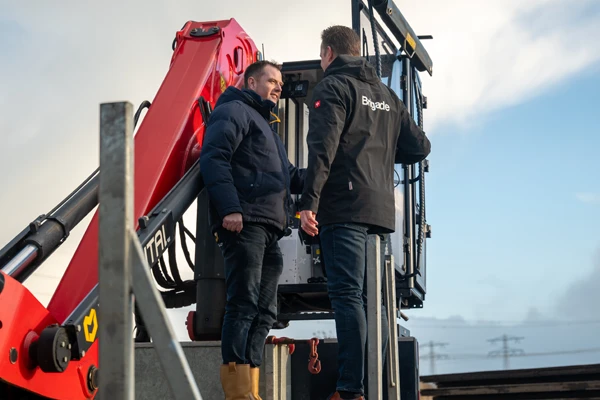
Brigade Electronics provides vehicle safety systems designed specifically for Special Purpose Vehicle OEMs. Our products are independently tested to meet the requirements of R151, R158 and R159 under the General Safety Regulation (GSR).
R151
Blind Spot Information System (BSIS)
Blind Spot Information System (BSIS) is an advanced automotive safety feature that utilizes sensors, cameras, and intelligent algorithms to detect and monitor the blind spots on the passenger side of the vehicle . The primary purpose of a BSIS is to assist drivers in identifying and avoiding potential collisions with cyclists that may be hidden from their direct line of sight.
The regulation imposes the following requirements:
- System monitors the blind spot on the passenger side of the vehicle to prevent collisions with cyclists
- For vehicles in all N and M classes
- When operating the vehicle between 0 and 30 km/h
- BSIS informs the driver of a cyclist in the blind spot via an optical, acoustic, haptic or combined signal.

Brigade’s Solution to R151
GSR Compliant
Independently tested and shown to conform with the performance requirements of R151.

Radar Predict
Right Side: for left-hand drive vehicles
Model |
Part Number |
| RP-010: 77GHz Radar Predict sensor system with AI | 7625 |
Left Side: for right-hand drive vehicles
Model |
Part Number |
| RP-001: 77GHz Radar Predict sensor system with AI | 7500 |
M2
M3
N2
N3
R158
Rear Visibility and Detection
Reversing devices are primarily designed to assist drivers during reversing or parking situations where limited visibility can increase the risk of accidents or collisions. It enhances the driver’s awareness of their surroundings, especially in blind spots, and helps them manoeuvre the vehicle with greater precision and confidence. By providing visual and audible feedback about nearby objects or obstacles. Reversing devices contributes to improved safety and reduces the likelihood of accidents during these manoeuvres.
The regulation imposes the following requirements:
- The system monitors the rear of the vehicle to prevent collisions while reversing.
- For vehicles of classes M2, M3, N2 and N3
- Activated when selecting reverse gear
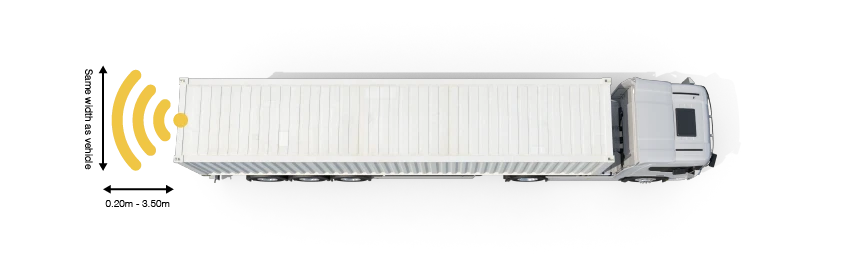
- The range is from 0.2m to 3.5m behind the vehicle, dependent on rear visibility or detection
- Detection of the same width as the vehicle
- Informs the driver of an object when reversing via an acoustic, optical or haptic signal.
Brigade’s Solution to R158
Brigade has a full range of AHD and CVBS cameras capable of meeting the performance requirements of R158 including the VBV-7100C, BE-810C and VBV-2230C.

Camera Monitor Systems
The following cameras and monitors have been tested independently and shown to comply with the performance requirements of R158.
VBV-7100C AHD Camera

- High definition (1080p)
- Viewing angle (HxVxD): 110° x 60° x 127°
- IP69K
- Size (WxHxD): 81 x 77 x 70mm
- 3 year warranty
BE-810C Shutter Camera with WDR

- Viewing angle (HxVxD): 103 x 71 x 134°
- IP68 / IP69K
- Size (WxHxD): 123 x 86 x 80mm
- 5 year warranty
VBV-2230C AHD AI Camera
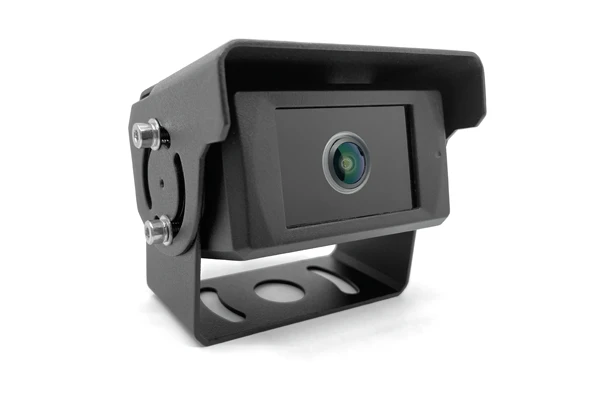
- High definition
- 12-24Vdc
- Camera Viewing angles:
Horizontal 52°
Vertical: 30° - AI Detection range:
Rear: Up to 11m (dependent on camera mounting height) - IP69K
- Camera Size (WxHxD): 97.5×75.3×72
- 2 years warranty
R159
Moving Off Information System (MOIS)
MOIS is a system to detect and inform the driver of the presence of pedestrians and cyclists in close-proximity to the front of the vehicle and, if necessary, warn the driver of a potential collision. The information system should minimise false alarms.
The regulation imposes the following requirements:
- The system monitors the blind spot in front and prevents collisions with pedestrians or cyclists
- For vehicles of classes M2, M3, N2 and N3
- When operating the vehicle between 0 and 10 km/h
- MOIS informs the driver of a cyclist or pedestrian in the blind spot via an optical, acoustic, haptic or combined signal.
- From the front edge of the vehicle, the system must detect VRUs up to 4.0 meters forward for informational alerts, 2.0 meters forward for collision warning alerts.
- The detection area width in front of the must extend 0.9 meters to left of the vehicle’s longitudinal centerline and 0.9 meters to the right. This gives a total detection width of 1.8 meters along the front middle of the vehicle.

Brigade’s Solution to R159
Brigade’s R159 *Front Radar is an advanced dual-radar collision prediction system with a 180 detection angle to the front of the vehicle. The driver is alerted through visual and audible signals if a vulnerable road user is detected in close proximity.
*Will be independently tested to conform to the performance requirements of R159.

Front Radar Sensor System
- 9-32Vdc
- Detection length: 4.2m
- Detection width: 4.2m
- Sensor size (WxHxD) 115 x 95 x 41mm
- Sensor size with bracket (WxHxD) 200 x 110 x 43.5mm
- Display size (WxHxD) 80 x 40 x 20mm
- IP69K sensor
- 3 year warranty
When do GSR requirements come into force?
The General Safety Regulation (GSR) came into force from 2022, depending on age of the vehicle and vehicle type.
Type Approvals
- Intelligent speed assist
- Alcolock interlock
- Driver drowsiness & attention warning
- Emergency stop signal
- Reversing detection
- Pedestrian & Cyclist warning
- Blind spot information (active)
- Indirect vision (passive)
- Front nearside proximity sensors
- Audible warning
New Registrations
- Intelligent speed assist
- Alcolock interlock
- Driver drowsiness & attention warning
- Emergency stop signal
- Reversing detection
- Pedestrian & Cyclist warning
- Blind spot information (active)
- Indirect vision (passive)
- Front nearside proximity sensors
New registrations
- Advanced driver distraction warning
Type approvals
- Event data recorder
New registrations
- Event data recorder
Frequently Asked Questions
What is GSR2 and how does the General Safety Regulation (EU) 2019/2144 affect trucks?
How does the GSR2 blind spot rule for trucks work?
What are the new EU General Safety Regulation requirements for trucks?
What is a Moving Off Information System (MOIS) for HGVs?
When do the GSR2 truck safety regulations come into effect?
What safety equipment is required to support GSR2 compliance?
Where can I buy GSR2-compliant camera and detection systems?
How Brigade Can Help
Brigade representatives sit on the UNECE IWG working group to advise and support policy development. We are experts in a wide range of vehicle safety devices, particularly vulnerable road user detection for the; nearside, rear and front of the vehicle. We have a large engineering department that design award winning safety solutions to meet both aftermarket and OEM standards. Our expertise covers ultrasonic, radar, camera, digital recording and RFID object detection technologies.