


Dublin kan blive den næste store europæiske by, der indfører en Direct Vision Standard (DVS) for tunge godskøretøjer, efter at byrådet i Dublin har vedtaget at undersøge et system baseret på den model, der allerede er i brug i London.
How should a future Dublin Direct Vision Standard work alongside the EU General Safety Regulation (GSR) and the safety systems already fitted to newer HGVs?
Med mere end 50 års erfaring inden for sikkerhed i erhvervskøretøjer og førstehåndsindsigt i at støtte vognparker gennem begge faser af Londons Direct Vision Standard, mener Brigade Electronics, at Dublin har mulighed for at lære af de erfaringer, der allerede er gjort andre steder, og udvikle en praktisk og effektiv tilgang til at reducere antallet af kollisioner med sårbare trafikanter.
What is being proposed for Dublin?
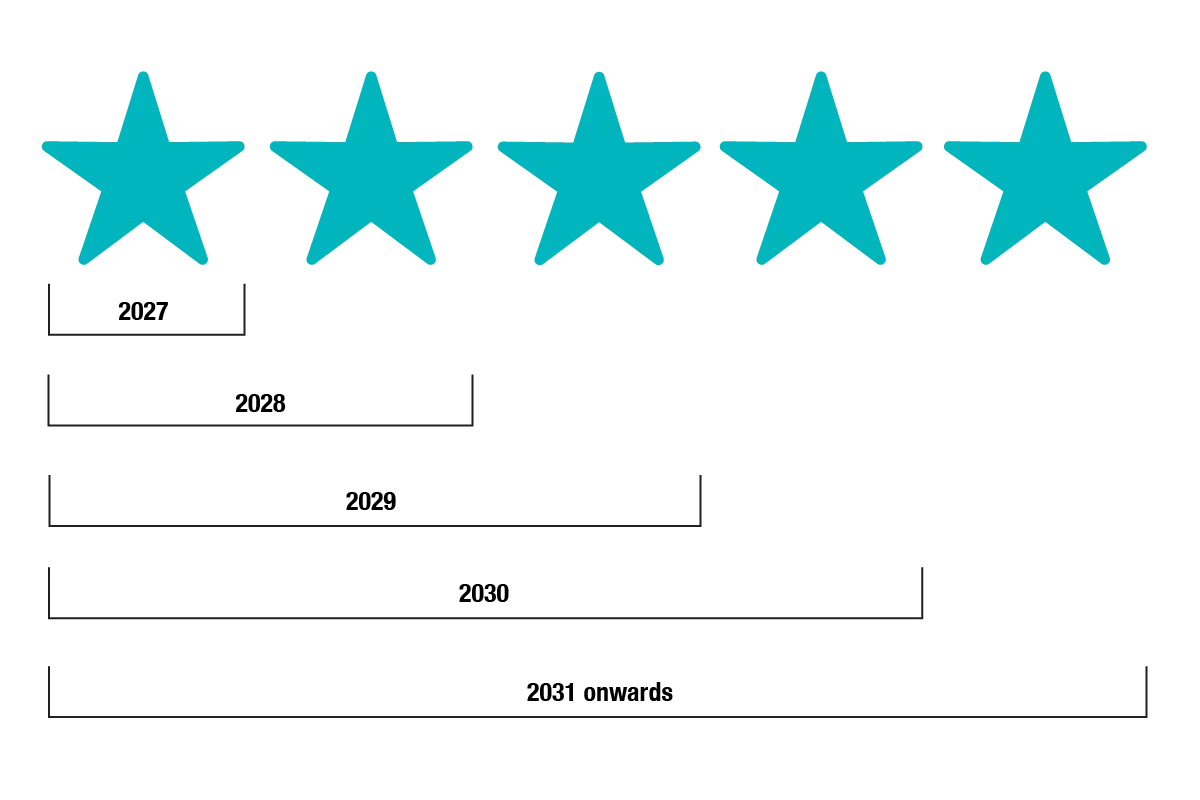
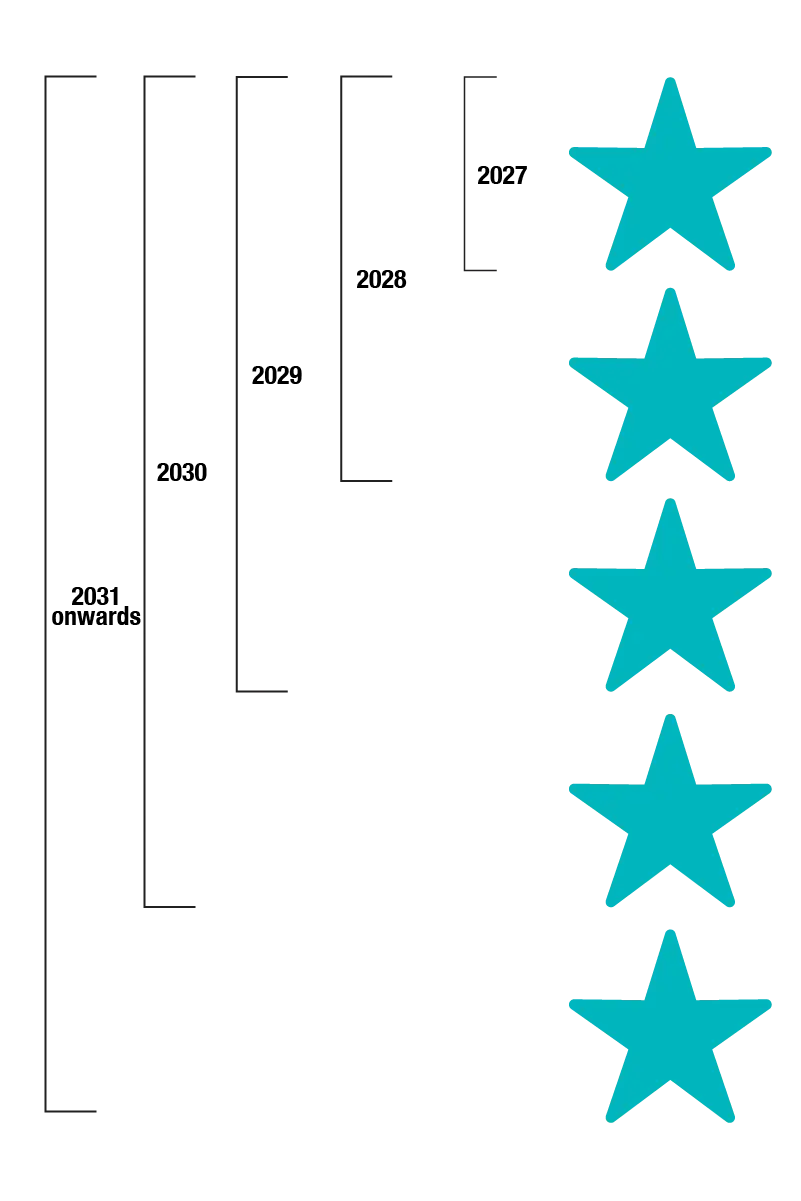
- A minimum one-star Direct Vision Standard rating in 2027
- Two stars in 2028
- Three stars in 2029
- Four stars in 2030
- Five stars from 2031 onwards
The motion proposes calculating the rating using the same system applied to HGVs in London.
The proposal has been referred to Dublin City Council’s Mobility and Public Realm Strategic Policy Committee for further consideration, meaning the detailed technical requirements have not yet been finalised.
This distinction is important. Dublin does not currently have a final DVS specification, and operators should therefore avoid assuming that London’s requirements will simply be replicated in full.
However, London’s experience provides a useful indication of the issues Dublin will need to consider.
What can Dublin learn from London DVS?
London introduced the Direct Vision Standard in 2020, using a vehicle’s star rating to assess how much a driver can see directly through the cab windows.
Princippet er enkelt: Jo bedre førerens direkte udsyn omkring lastbilen er, desto mindre er behovet for at bruge spejle og indirekte udsyn, når man skal få øje på cyklister, fodgængere og andre sårbare trafikanter. London er efterfølgende gået over til sit Progressive Safe System (PSS).
Under the current scheme, HGVs over 12 tonnes rated below the required three-star threshold can continue to operate in Greater London if they meet the required Progressive Safe System specification. This is particularly important for existing fleets.
Rather than making vehicle replacement the only option for every lower-rated HGV, the Progressive Safe System provides a route for operators to improve safety through appropriately specified technology.
Brigade has been involved with DVS since its introduction and has supported fleets through both the original standard and the transition to PSS.
Doesn’t EU GSR already cover this?
This is likely to be one of the most important questions considered as Dublin develops its proposals.
EU’s General Safety Regulation (GSR2) har indført en række obligatoriske sikkerhedsteknologier til køretøjer, herunder systemer, der er udviklet til at forbedre registreringen af sårbare trafikanter ved siden af og foran tunge køretøjer.
These include requirements associated with:
- UNECE Regulation 151 – Blind Spot Information Systems
- UNECE Regulation 159 – Moving Off Information Systems
This is an important improvement in vehicle safety.
However, GSR compliance and DVS/PSS compliance should not automatically be considered the same thing.
Emily Hardy of Brigade Electronics has previously highlighted this distinction when discussing London’s Progressive Safe System. She explains:
“GSR is an extremely positive development, particularly for vehicles that previously may have had no vulnerable road user detection technology fitted at all. However, the important point when looking at schemes such as DVS is that GSR should be considered a safety baseline rather than necessarily the highest standard that can be achieved. London’s Progressive Safe System has specific requirements around detection areas, warnings and the way technology supports the driver. A vehicle meeting GSR requirements and a vehicle meeting a city-specific Direct Vision or Safe System specification are therefore not necessarily the same thing.”
That distinction could become particularly important in Dublin.
Direct vision and technology should work together
A Direct Vision Standard should, by definition, promote better direct vision from the cab. Technology should not be regarded as a substitute for vehicle design that allows drivers to see vulnerable road users directly wherever possible.
At the same time, there will continue to be large numbers of existing HGVs on Irish roads that cannot achieve a higher star rating simply by adding equipment.
This is where London’s experience with a Safe System approach becomes relevant.
Hardy says:
“Direct vision should remain fundamental, but replacing an otherwise serviceable HGV cannot always be the only practical route to improving safety. The challenge is to create an effective standard that combines direct vision with intelligent technology capable of helping drivers identify vulnerable road users in the areas they cannot see. That technology also needs to provide meaningful warnings. Simply giving a driver more alarms is not necessarily making the vehicle safer.”
Moving from detection to collision risk
A system that continuously warns whenever anything is detected alongside a vehicle can create unnecessary alerts and increase the amount of information the driver has to process.
Newer technologies can go further.
Brigade Radar Predict
Radar Predict er udviklet specifikt til at beskytte sårbare trafikanter i nærheden af tunge lastbiler.
Using intelligent radar technology, the system analyses factors including the movement, speed and direction of the vehicle and nearby road users.
Rather than simply identifying that something is present alongside the vehicle, Radar Predict is designed to assess whether a collision risk is developing. It can distinguish between moving and stationary objects, helping reduce unnecessary driver warnings.
For articulated vehicles, the system also incorporates trailer recognition, enabling detection to account for the movement of the vehicle and trailer during manoeuvres. This type of predictive approach is particularly relevant when considering HGVs operating in busy urban environments.
Protecting the front blind spot with Front Radar
The area immediately in front of a large vehicle can present another significant risk, particularly when an HGV moves away from a stationary position.
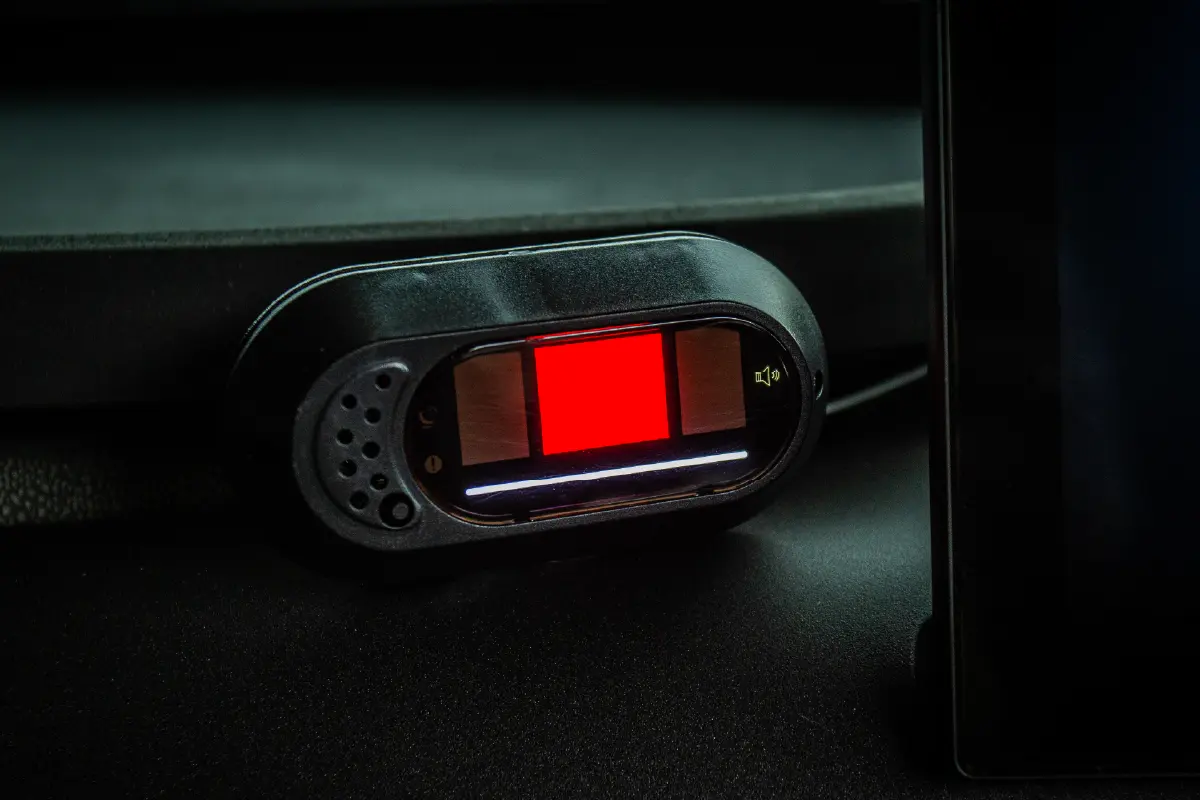
Brigade’s Front Radar er udviklet til at understøtte detektering af sårbare trafikanter i dette område.
The dual-radar system provides a 180-degree detection angle across the front of the vehicle and gives the driver visual and audible warnings when vulnerable road users are detected close to the vehicle.
Brigade offers Front Radar solutions developed for both London DVS/PSS requirements and UNECE R159 Moving Off Information System requirements. The existence of different versions also illustrates an important point for Dublin policymakers: although GSR and DVS share similar road-safety objectives, their technical requirements are not identical.
What could a Dublin Safe System look like?
However, one option policymakers may wish to consider is a framework that combines:
- Improved direct vision from vehicle cabs
- Intelligent blind-spot detection
- Moving-off detection at the front of HGVs
- Camera-monitor systems
- Appropriate visual and audible driver warnings
- External vulnerable-road-user warnings where appropriate
- Defined technical and installation standards
- A practical retrofit pathway for existing vehicles
Such an approach could allow Dublin to encourage the continued development of safer vehicle design while also delivering improvements across the large number of existing HGVs already operating on Irish roads.
GSR should be the starting point, not the finishing point
Europe’s General Safety Regulation is an important step forward.
Det betyder, at et stigende antal nye erhvervskøretøjer vil blive indlemmet i vognparker med sikkerhedsteknologi monteret som standard, men Vision Zero-målene kræver, at lovgivere, køretøjsproducenter, operatører og teknologileverandører til løbende at overveje, om der med rimelighed kan opnås yderligere forbedringer.
Hardy adds:
“The objective shouldn’t simply be to ask whether a vehicle complies with a regulation. The question should be: what combination of direct vision, intelligent detection and driver information gives us the best practical opportunity to prevent a collision? Dublin now has the benefit of London’s experience as well as GSR. Bringing those two areas together intelligently could create an extremely strong standard for vulnerable road user safety.”
Brigade’s experience in HGV safety regulation
Alongside London’s Direct Vision Standard and Progressive Safe System, Brigade is involved in or closely monitors regulatory and Vision Zero initiatives worldwide, including developments in Australia, North America, Europe and Asia.
Brigade has offered to share its technical experience with those developing Dublin’s proposed Direct Vision Standard, including knowledge of DVS, PSS, GSR requirements and practical aftermarket retrofit solutions.
The company can also support technical evaluations and vehicle trials to help demonstrate how different technologies perform in real-world operating environments.

Preparing for Dublin DVS
Fleet operators should therefore monitor the development closely rather than purchasing equipment based on assumptions about what the final standard will require.
For operators wishing to understand the differences between DVS, Progressive Safe System, UNECE R151, UNECE R159 and EU GSR, Brigade’s vehicle safety specialists can provide guidance on existing requirements and the technologies currently available.
Talk to Brigade
Are you operating HGVs in Ireland or preparing your fleet for changing vulnerable-road-user safety requirements?
Kontakt vores team vedrørende Direct Vision Standard, GSR, Radar Predict, Front Radar og eftermonterede sikkerhedsløsninger til køretøjer.