


Introduced in October 2024 by Transport for London (TfL), the Progressive Safe System (PSS) applies to all commercial vehicles weighing over 12 tonnes entering and leaving London. You will need to ensure your fleets are compatible with the updated Direct Vision Standard requirements. Failure to obtain a DVS license will result in daily fines. £550 to the operator and £130 to the driver.
Recent statistics [2021] on international freight transport from the UK government show that foreign-registered trucks carrying freight to and from the UK carried 30.6 million tonnes, of which 20.2 million tonnes were imported into the UK. The Dutch freight and logistics market is estimated at USD 73.70 billion in 2024 and is expected to reach USD 92.52 billion by 2029, with a compound annual growth rate of 4.65% in those five years.
Trucks traveling from the Netherlands to the UK represent one of the highest totals of imported and exported freight. With a significant number of these trucks heading to or via London, it is essential that Dutch carriers are fully aware of compliance requirements to ensure smooth transit through the UK capital.

What are the Main Changes?
The minimum star rating for the Direct Vision Standard increased from one to three stars in October 2024. This means vehicles that do not meet the minimum star rating must be fitted with additional safety equipment to obtain a license.

Vehicle Safety Technology to Avoid Collisions
Vehicle Sensors on the Front
The PSS also requires a front-end sensor system. The front-side system requires two alarms.
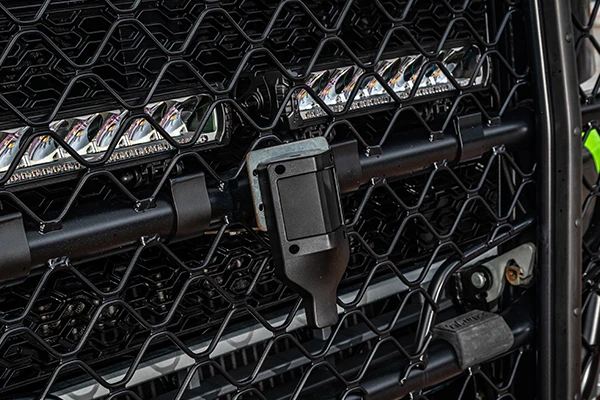
One when the radar detects a vehicle with a registration number when preparing to drive away.
One when the radar detects a vehicle with a registration number when it has started its forward maneuver.
What if my Vehicle is General Safety Regulation (GSR) Approved?
Vehicles approved to UNECE Regulations 151 and 159 are deemed to comply with the side detection system and front sensor, but drivers should be aware that there is a difference between the requirements of Regulations 151, 159 and DVS, as they have different detection areas. A product that complies with Regulations 151 and 159 may not necessarily meet DVS requirements in the aftermarket.
The PSS describes specific test procedures and it is your responsibility to confirm that equipment supplied by the manufacturer meets the requirements via a ‘sensor functionality statement’. Brigade’s functionality statements can be downloaded here.

How Brigade Can Help
Brigade are best positioned to support fleet operators to get DVS compliant. We fully understand that while you want to do all that you can to improve the safety of your fleets, frequent updates and changes to vehicle safety regulations can be expensive, time-consuming and require increasingly complicated technological additions to already overcrowded cabs.
We therefore prefer integrated solutions that are not only cost-effective but also provide a crossover between the different regulations in Europe and the UK. Our solutions are plug-and-play and ensure vehicles meet the highest safety standards.
If you are a fleet operator in the Netherlands with vehicles travelling to London, you need to make sure your fleet is DVS compliant to avoid the daily fines. Contact Brigade for helpful advice on retrofitting your trucks with state-of-the-art equipment.