


The French bus and coach industry continues to expand. According to data from the Comité des Constructeurs Français d’Automobiles (CCFA) the French bus and coach market showed 4.9% growth in 2023, with registrations rising to 5,696. Data from Statista reports a projected market volume of 6.51K vehicles by 2030, with an increasing shift towards electric and hybrid models following the introduction of government incentives and the rise in environmental concerns.
France has the largest bus and coach market in the EU; however, it’s not immune to the difficulties affecting the industry globally, and in this article, Philippe Bessy, technical head bus and coach referent at Brigade Electronics France, takes a look at the challenges and discusses how to overcome them.

There are three main issues facing the sector in the immediate future:

Shortage of Drivers

Operational Costs

Regulatory Compliance
Shortage of Drivers
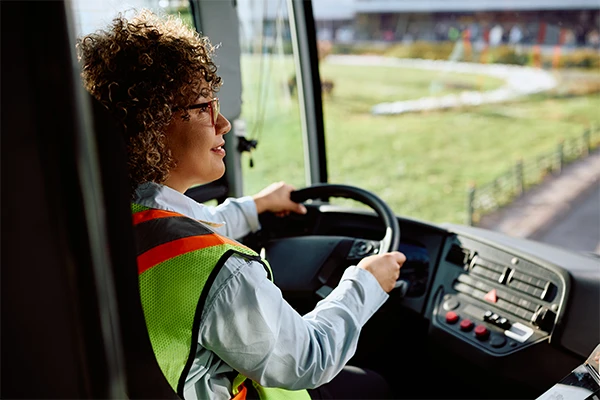
There is huge competition for good drivers from other sectors, such as commercial haulage, and in addition, factors such as low pay and stressful working conditions make it difficult for companies to fill their vacancies. The driver shortage is the biggest issue facing the industry at the moment.
Operational Costs
Regulatory Compliance
Autonomous Vehicles – The Future of Buses and Coaches
A significant change in the industry is the potential shift towards autonomous vehicles, which can only be hastened by the shortage of drivers.
The increase in safety technology could lead to a future where bus and coach drivers are no longer necessary, which will fundamentally alter the market. There are already pilot schemes in Scotland for driverless buses and this kind of initiative is likely to be trialled in France before too long. The requirement for active safety products will increase in parallel, and the overall product requirements, what we need from each one, will inevitably differ from current standards. It’s a fascinating advancement and at Brigade we’re keeping well ahead of the game with our research and development to ensure we’re ready for it when necessary.
The Impact of the GSR Regulation
The EU’s Vehicle General Safety Regulation initially came into force in 2022, and further steps had to be in place by July 2024. It’s been a crucial step in enhanced road safety across the whole EU area and has had a big impact on the bus and coach industry, not least because of the added costs of compliance. It brought in a range of mandatory advanced driver safety systems, which for buses and coaches included the following:


Philippe is keen to stress the importance of ensuring drivers are fully on board with the need for any kind of monitoring devices, and that they realise the emphasis is on the safety of both passengers and driver rather than the company trying to spy on how they’re driving.
Traditionally there has always been a certain amount of resistance to the idea, so it’s important that transport companies take time to explain the reasons behind and benefits of the GSR regulations to their drivers in order to gain acceptance,